
Leon County Three-Day Release Records
Leon County has no verified sheriff-hosted roster, recent-release archive, or 72-hour view. It publishes no window, cadence, retention rule, field set, or photo display. Texas IVSS-Counties reports status for one selected person, not a countywide feed. Former detainees may stop appearing, and IVSS is not the official record.
A three-day inquiry is a bounded records question. Write the start and end dates with times. Ask the Sheriff for existing book-out entries within that span. Do not assume a ready-made list exists.
Check Leon County 72-Hour Releases
Preserve the chronology. Collect the full name, date of birth or age, booking number, Jail ID, or SID.
- Search Texas IVSS-Counties for one person.
- Compare identifiers and treat any event as a lead.
- Call the Leon County Sheriff at 903-536-2749.
- Request book-out entries for the exact interval.
- Check the proper Leon court for legal disposition.
- Follow a transfer in the receiving system.
For the current day, use the 24-Hour Release List method. Both ranges need direct confirmation.
Leon County Three-Day Request Fields
No public feed supplies a verified schema. These are request fields, and disclosure depends on the existing record.
| Field | Use |
|---|---|
| Name, alias, DOB or age | Matches identity. |
| Booking number | Separates admissions. |
| Booking and book-out times | Tests the boundary. |
| Charge and cause | Links court. |
| Release reason | Distinguishes release types. |
| Receiving agency | Shows continued custody. |
A date without disposition can mislead. The Sheriff's entry and court order answer different questions.
Leon County Weekend Release Checks
A 72-hour range covers events missed when offices are closed or news arrives late. No source establishes Leon County's weekend or holiday practice. Do not assume a discharge hour, door, waiting area, or next-business-day rule.
IVSS runs around the clock, but a source can lag or go offline. Anchor a request to dates and times, then ask which timestamp reflects physical book-out.
Note: A broader window aids catch-up, but the Sheriff's entry establishes Leon County's recorded departure time.
Leon County Three-Day Fallbacks
Leon's Sheriff page keeps an old VINELink direction, but Texas moved county VINE to IVSS-Counties in 2025. Use the current portal and its contact confirmation. No current county PIN requirement was verified.
For transfer to TDCJ, a match in the TDCJ search means state confinement. Data is at least 24 hours old and excludes discharged people. A no-result cannot prove state release. Use TDCJ records for prior facts.
BOP, ICE, and USMS need separate trails. A BOP release date proves only exit from BOP. ICE results have a short recent span. USMS lacks a former-prisoner locator.
Leon County Three-Day Data Gaps
IVSS may stop displaying a former detainee. Continuous processing does not create a retained 72-hour archive. A missing record may reflect identity variation, an offline agency, or timing. Leon's local solution is an IVSS lead paired with a Sheriff request bounded to three days.
A book-out is direct. A court order explains the event. A receiving record proves a handoff. An alert is notice. A vanished name is merely a clue.
Leon County 72-Hour Source Check
The official Sheriff page identifies the custodian.
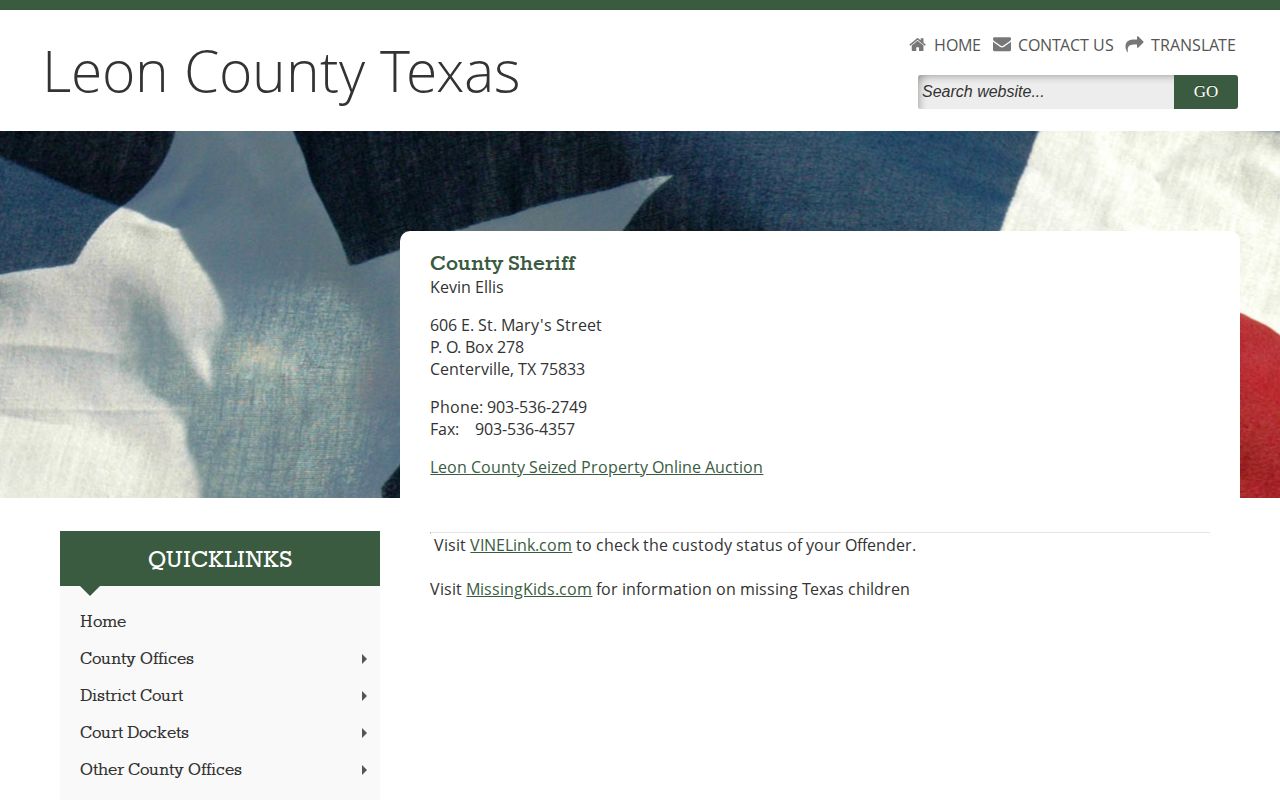
It supports direct contact but does not offer a rolling release list.
Leon County Release Evidence
Each departure points to a different source.
| Event | Confirmation |
|---|---|
| Bond or court release | Book-out plus court order |
| Sentence completion | Book-out plus judgment |
| TDCJ transfer | Book-out plus TDCJ match |
| Federal or ICE handoff | Book-out plus receiving record |
Always identify which custodian released the person.
Rebuild Leon County Release Chronology
A three-day review may contain a court order, jail departure, and receiving-agency intake on different dates. Start with the Sheriff's book-out because it records the end of Leon County's physical hold. Next, use the proper clerk to locate the filed bond, dismissal, judgment, sentence, community-supervision order, or revocation. Those filings explain legal authority but do not replace the physical timestamp.
Leon District Clerk is the route for felony district cases. Leon County Clerk handles misdemeanor county matters. Justice courts retain lower-level records. A docket setting is a lead, not proof of departure. Statewide re:SearchTX can help discover electronic filings where coverage exists, but the clerk should confirm completeness.
If the local record names TDCJ, another county, USMS, or ICE as recipient, the chronology continues after Leon's book-out. Search the receiving system. A current TDCJ match confirms ongoing state confinement. “Released in the last 72 hours” must remain tied to Leon County unless a later source proves community release.
Frame Leon County Three-Day Requests
Use a precise interval with stated start and end times. For one person, provide the booked name, aliases, date of birth or age, local jail number, and approximate booking date. Ask for existing fields such as book-out time, release code, destination agency, and detainer disposition if maintained and public.
The Sheriff has not published a local fee, turnaround promise, field schema, or release-list format. Do not promise them. A focused request lets the office respond with the record it holds and apply lawful exceptions. Preserve the response with the IVSS alert and court record so the account remains traceable.
Search Leon County Release Records
Use the search tool for a lead, then verify it with the responsible office.
Sponsored Results
Set Leon County Release Endpoints
The phrase “last 72 hours” moves with the clock. Replace it in a record request with fixed local endpoints. State the starting calendar date and time, ending date and time, and whether both are included. If the period crosses a weekend, list each date. Keep the sent request so the Sheriff's response can be compared with the same interval instead of a later rolling range.
Exact boundaries matter when a judge signs an order on one day and physical book-out occurs on another. An IVSS event may also become visible after a caller first checks. These timing differences are not proof that a source is wrong. The order establishes authority, the jail record establishes departure, and the alert records a reported status event.
No Leon source states special weekend, holiday, or after-hours release rules. It does not publish a set release time, discharge door, waiting area, or property schedule. Confirm those details directly. The three-day period helps locate an event but does not define jail operations.
Build Leon County Court Chronology
When the book-out is not yet available, court records can bound the sequence. A complaint or indictment establishes the case. A bond order can show release authority, while a filed bond narrows timing. A dismissal, acquittal, plea, judgment, sentence, community-supervision order, or revocation explains legal disposition. None proves the precise moment the person left the jail.
Route felony district matters to Leon District Clerk. Route misdemeanor county matters to Leon County Clerk. Justice courts keep their own lower-level matters. re:SearchTX can help discover electronic filings where available, but local coverage varies. Confirm completeness or certification with the clerk.
Pair the court filing with the Sheriff book-out. If the local record names TDCJ, another county, USMS, or ICE, add the receiving record as the next event. This two-evidence method preserves the legal reason, physical departure, and later custody without merging them.
Follow Leon County Receiving Custody
A TDCJ transfer should lead to the current TDCJ search. Its data is at least 24 hours old, updates on working days, and later excludes discharged people. A current match supports continued confinement. Prior state release facts require TDCJ records, not an inference from a blank result.
A BOP record with a future date means federal custody continues. A past released date proves exit from BOP only. ICE uses different identifiers and a shorter recent-release window. USMS detainees may be held in contract jails, so use the federal docket and actual facility. Each route continues the Leon County three-day chronology under the correct custodian.