
Leon County Parole Versus Probation
Parole and probation both permit a person to live in the community under conditions, but they arise from different legal events. Parole is the conditional release of a TDCJ prisoner before the full sentence expires. The Texas Board of Pardons and Paroles decides release where authorized, and the TDCJ Parole Division supervises the person. Probation, called community supervision in Texas law, comes from a court order. A person on probation may never have served a TDCJ prison term. Leon County Adult Probation handles that local court-supervision route.
The signed judgment or community-supervision order is the best document for probation. TDCJ release and status information is the right trail for parole or mandatory supervision. Mandatory supervision is a separate statutory TDCJ release process. Discharge means the applicable sentence or supervision duty has ended. These terms should not be inferred from a roster disappearance.
| Status | Source | Strongest confirmation |
|---|---|---|
| Probation | Leon court and Adult Probation | Signed judgment or supervision order |
| Parole | BPP and TDCJ Parole Division | TDCJ release and current parole status |
| Mandatory supervision | TDCJ and BPP | State release certificate and status record |
| Discharge | Agency that imposed the sentence | Final discharge or release record |
Verify Leon County Parole Status
Start with the agency that last held the person. A person released from TDCJ may be on parole, mandatory supervision, or fully discharged. The public TDCJ inmate search is limited to people currently incarcerated, so absence after release is expected and does not prove a particular supervision status. Obtain the actual state release information before relying on a missing search result.
- Use the TDCJ inmate search to determine whether the person still appears in current state custody. Match the TDCJ or SID number where possible.
- Request TDCJ release information or use the official parole status line. Provide the name, TDCJ number, and date of birth as requested.
- Ask whether the status is parole, mandatory supervision, or discharge. Do not substitute an eligibility date or approval vote for physical release.
- Identify the supervising office through TDCJ. Leon residence does not establish assignment to a particular parole office.
- Keep the state release record with any release certificate and later discharge notice. Those documents distinguish successive stages.
The BPP Parole Status Line is 844-512-0461. BPP’s main number is 512-406-5452, and the TDCJ Parole Division number is 512-406-5401. These are verification routes, not public residential locators. Staff may limit what can be disclosed.
Leon County Adult Probation Office
Leon County has a named local route for court community supervision. The official Adult Probation page lists P.O. Box 40, Centerville, Texas, phone 903-536-2689, fax 903-536-2579, and weekday hours from 8 a.m. to 5 p.m. It also links Walker County CSCD resources. The office can address reporting logistics for a person under its authority, but it is not the TDCJ Parole Division.
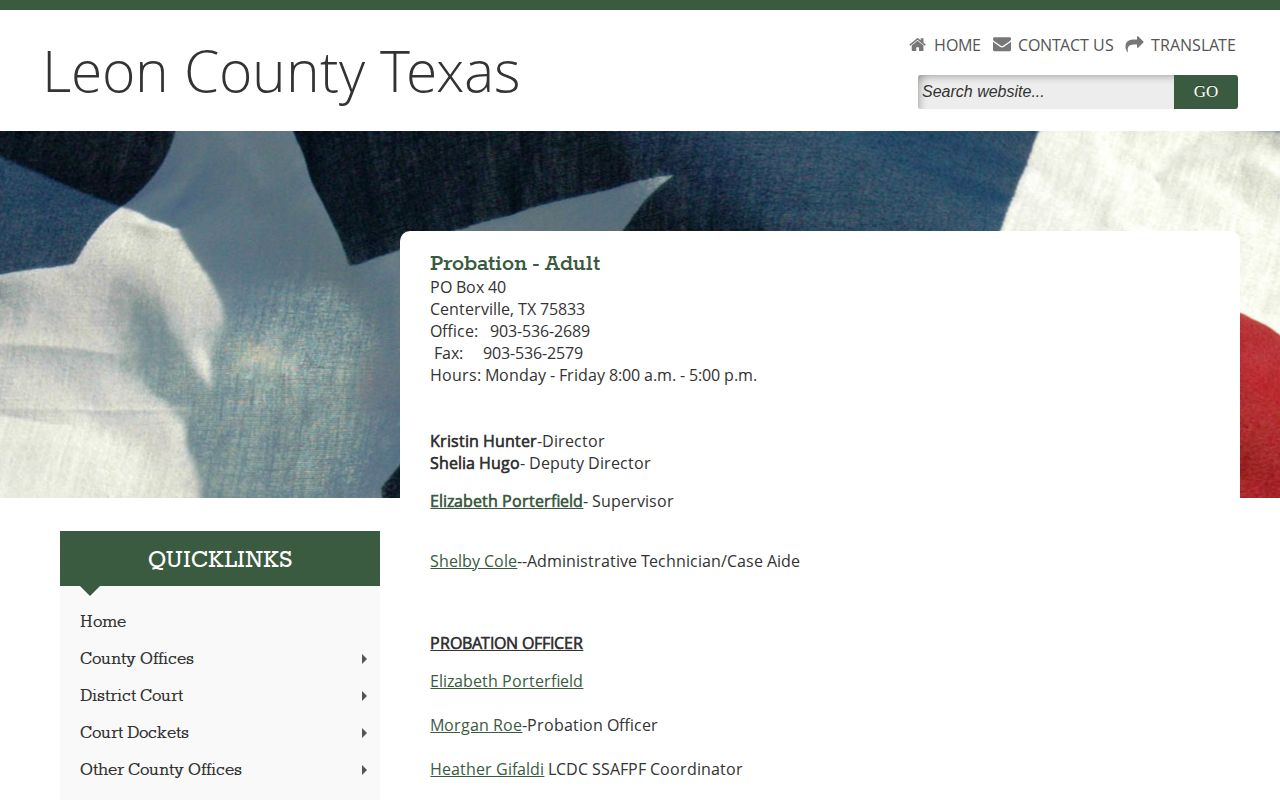
No Leon County online probationer lookup or county absconder list was verified. The signed court order establishes the legal status. The office contact then helps confirm the correct administrative path, subject to confidentiality rules. It should never be described as a way to obtain a person’s home address.
P.O. Box 40, Centerville, TX 75833
903-536-2689 · Fax 903-536-2579
Monday through Friday, 8 a.m. to 5 p.m.
Texas Parole Review Is Not Release
Ordinary Texas parole consideration does not use a formal individual hearing calendar. BPP panel members review a file and vote. An Institutional Parole Officer generally interviews the inmate and prepares a summary. A three-member panel votes in sequence, and two matching votes determine the result. Public agency meeting notices are not individual inmate hearing dates.
The official BPP review workflow shows the process that precedes a decision.
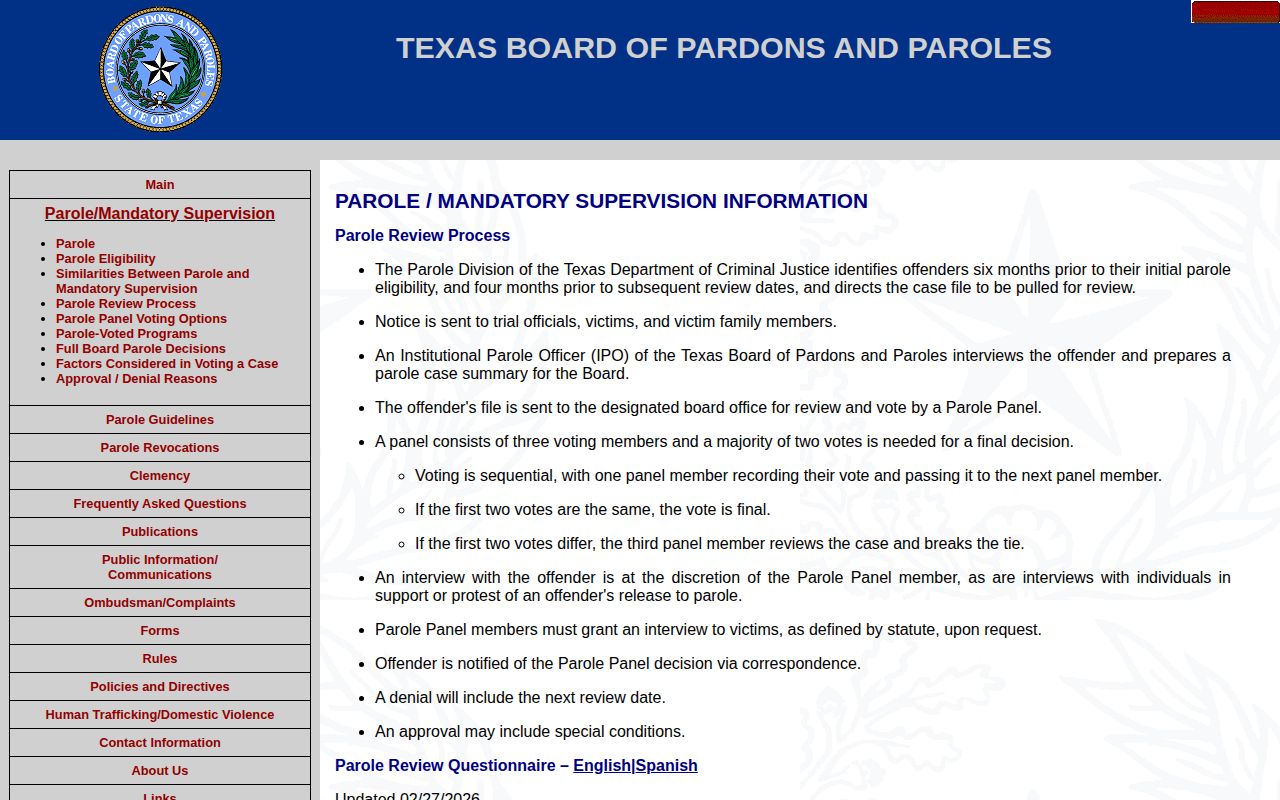
A denial may include a next-review setting. Approval can include special conditions, yet release may still depend on program completion, an approved plan or residence, a release certificate, and a records audit. Eligibility is also not a grant. CID Records calculates eligibility under offense and date rules; BPP decides release when the law gives it discretion.
Leon County Supervision Alerts
Texas uses separate notification systems for county and state custody. Texas IVSS-Counties replaced county VINE in September 2025. It can provide updates tied to county booking, release, court events, or transfer to TDCJ. TDCJ IVSS is the separate system for people in TDCJ custody, on parole, or on mandatory supervision. Choosing the wrong system can create a false gap.
For a state-prison or parole matter, open the TDCJ IVSS portal. Its account route uses email, username, password, and confirmation. A county-jail user should instead use IVSS-Counties unless the person transferred into TDCJ.
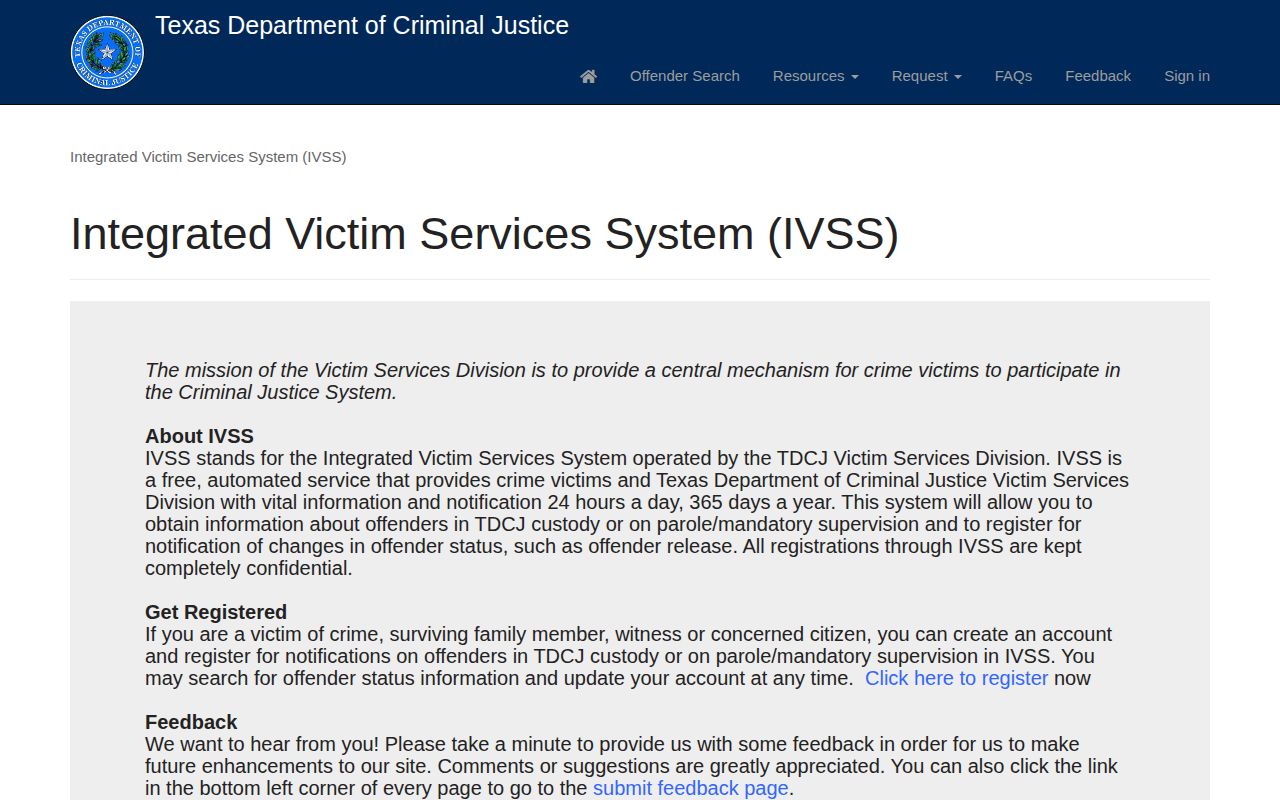
An alert is timely notice, not an official release record or a safety guarantee. Save the notice, then confirm the underlying event with TDCJ, BPP, the Sheriff, or the court as appropriate.
Leon County Violations and Absconders
Conditions may require regular reporting, compliance with court or parole instructions, and completion of programs imposed in the controlling order. A violation allegation is not the same as a final revocation. Revocation means the authority has withdrawn supervision after the process that applies to the case. A warrant may also exist without appearing in a general public supervision search.
No local Leon probation absconder list was found. TDCJ maintains a Parole Absconder Tip-Line at 866-680-6667, but that line is not a general lookup service. Do not label a person an absconder from an old post or commercial listing. Confirm the status through the supervising authority or an official court record. For urgent safety concerns, use the proper emergency or law-enforcement channel rather than attempting personal contact.
Leon Release Papers as Identification
A Texas acceptable-identification chart hosted by Leon County lists federal release certificates, TDCJ parole or mandatory-release certificates, and correctional inmate identification among supporting identity documents. This makes release paperwork useful beyond proving a custody event. The exact transaction still controls what is accepted, and the current rules should be checked before relying on one document.
The finding does not establish Leon County Jail’s own property-return or identification practice. No official source published that procedure. Call the Sheriff at 903-536-2749 to confirm which papers leave with a person and how unclaimed property is handled. State release certificates should be kept because they can also help distinguish parole, mandatory supervision, and later discharge.
How Leon County Supervision Ends
Probation ends according to the court’s order and any later discharge document. Parole or mandatory supervision ends through the state process, often when the sentence reaches discharge unless another lawful event intervenes. A person may also return to custody after revocation. Each change has its own source trail.
For probation, request the signed judgment and any discharge or revocation order from the correct Leon clerk. District Clerk records cover felony district cases; County Clerk records cover misdemeanor county matters. For parole, request TDCJ release and discharge information. The Leon County release record path explains how a Sheriff book-out fits beside those records. The jail timestamp proves departure from that custodian, while the supervision record explains what followed.
Public Record Search
Sponsored Results